
What actually changes
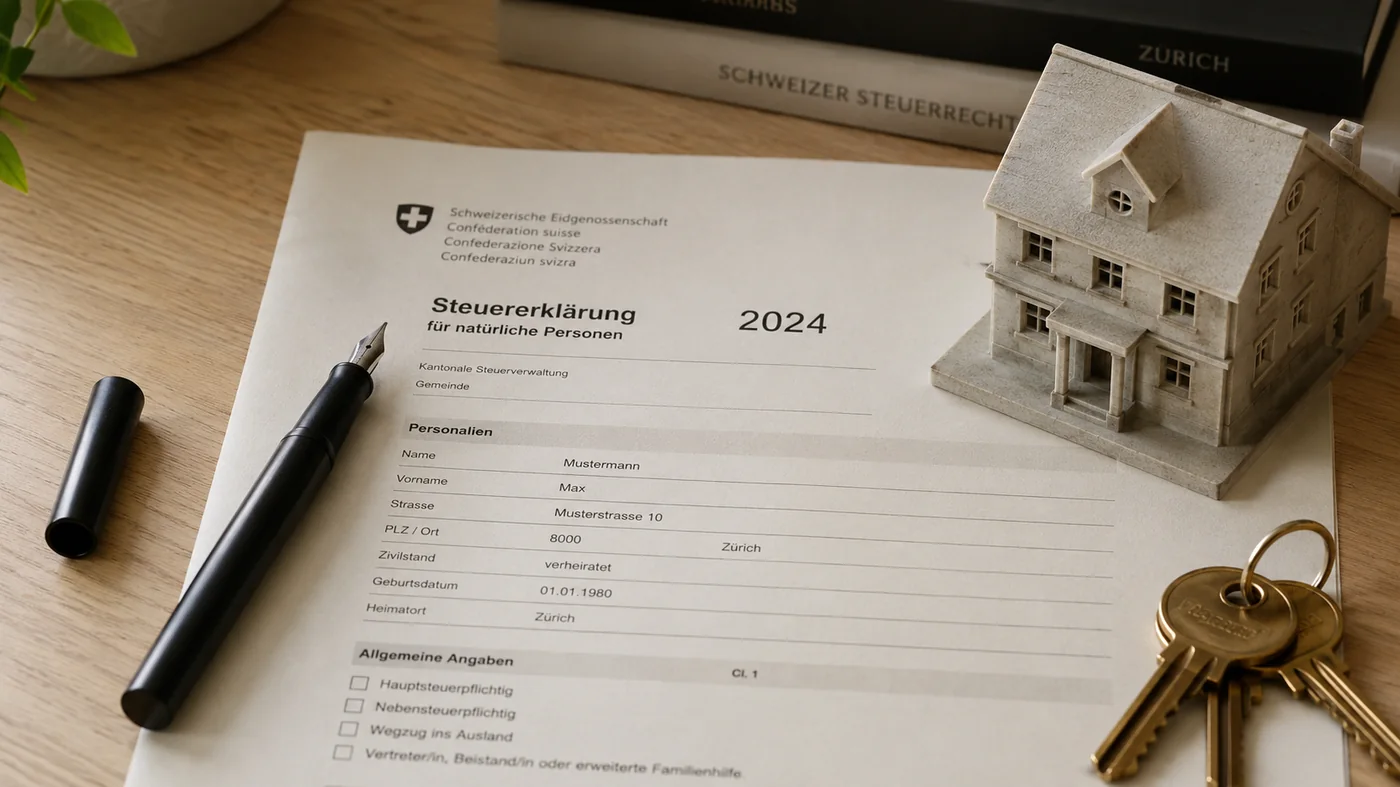
On 28 September 2025, the Swiss electorate voted by 57.7% to abolish the imputed rental value. From 1 January 2029, homeowners will no longer have to declare this notional income: the sum the tax authorities attribute to you as if you were renting from yourself. It marks the end of a system that has been in place for several decades.
The principle is straightforward: one tax disappears. But in return, the tax deductions that used to offset it disappear as well. Maintenance costs, mortgage interest, energy-efficiency renovations: everything you could deduct until now to soften the impact of the imputed rental value will no longer be deductible. This is a complete shift in the balance, not simply a tax giveaway.
The trade-off in one sentence
You no longer pay tax on income you never actually receive. But you can no longer deduct the expenses tied to your property. Depending on your circumstances, one side will outweigh the other.
Reform timeline
28 September 2025: Popular vote (passed with 57.7%)
Until 31 December 2028: Transition period, current rules still apply
1 January 2029: Abolition comes into force
What you will no longer be able to deduct
Today, the system works on a balance: the tax authorities tax you on a notional income (the imputed rental value, generally 60 to 70% of the market rent), but in return you can deduct your actual costs. From 2029, both sides of the equation disappear.
The deductions abolished at federal level for owner-occupied properties:
- Maintenance and renovation costs: no longer deductible for your main or secondary residence
- Energy-saving investments: abolished at federal level (cantons may retain them until 2050)
- Mortgage interest: abolished, with two exceptions
- Demolition costs: no longer deductible for new builds
The only exception preserved: the restoration of listed historic monuments remains deductible.
The two exceptions for mortgage interest
The reform does not eliminate interest deductions entirely. Two scenarios remain:
1. You are a first-time buyer. When buying your first home, you will be able to deduct up to CHF 10’000 per year (couples) or CHF 5’000 (single people) in the first year. This amount then tapers off gradually over ten years.
2. You own a rental property. If part of your property portfolio is let out, you can deduct the interest on a pro-rata basis, using a restrictive proportional method. For example, if your rented properties make up 70% of your total wealth (including real estate, securities and other assets), you can deduct 70% of your mortgage interest.
A concrete example: the figures
Let’s take two real-life situations to gauge the impact.
Case 1: The retiree with no mortgage (winner)
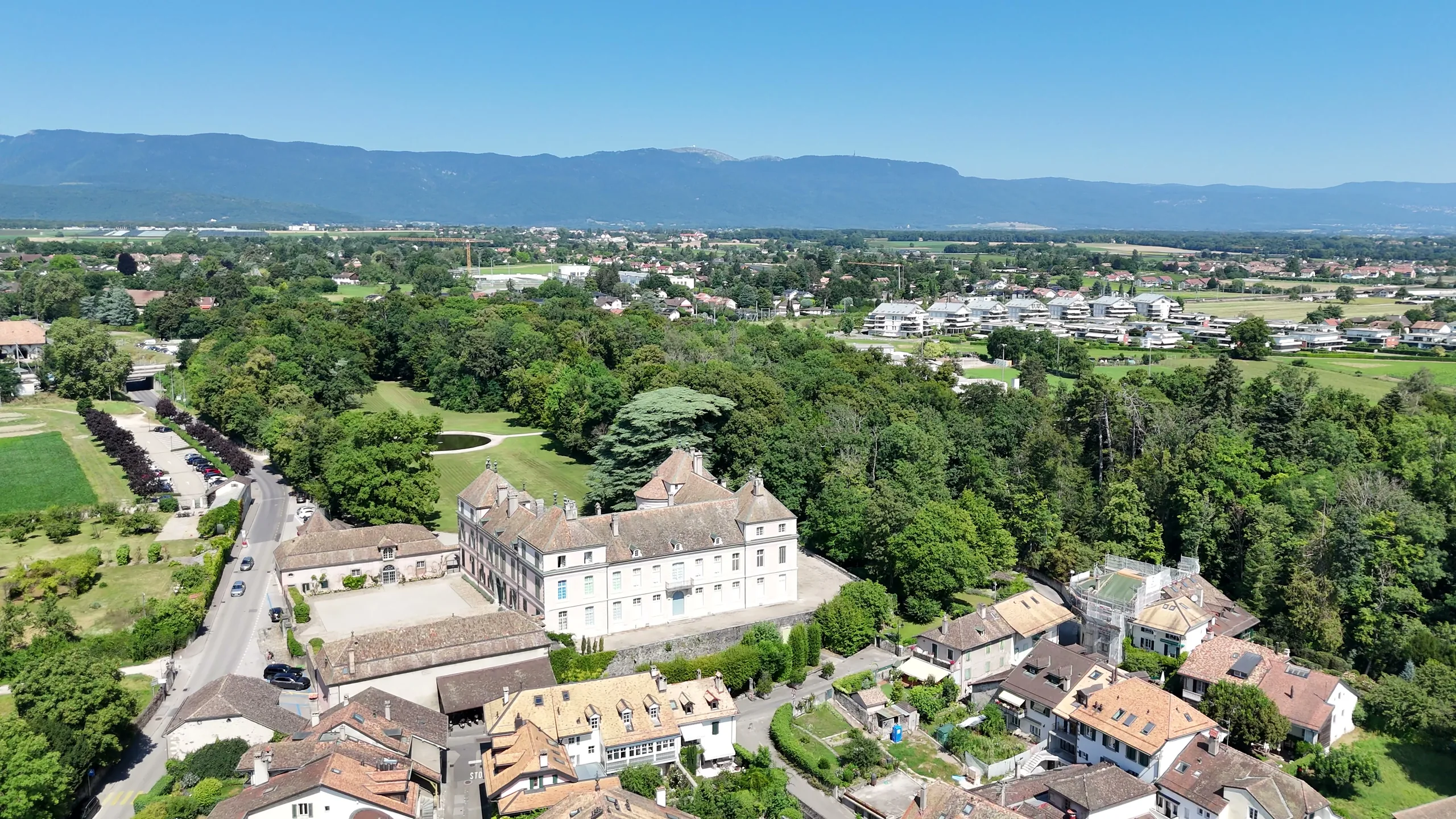
A retired couple in Coppet, owners of a villa valued at CHF 2’200’000. Mortgage paid off, no work planned. Their current imputed rental value: around CHF 38’000 per year (70% of an estimated market rent of CHF 4’500/month). At a marginal tax rate of 30%, they pay CHF 11’400 in tax per year on this notional income. From 2029, this tax disappears entirely. They have nothing left to deduct, since they have neither interest nor major expenses. Net gain: around CHF 11’400 per year.
Case 2: The young owner with a mortgage (potential loser)
A couple with two children, owners of a flat in Nyon. Mortgage of CHF 850’000, annual interest of CHF 12’750 (rate of 1.5%). Imputed rental value: CHF 25’200. Maintenance costs: CHF 7’500. Today, the net additional income tied to the property is low: CHF 25’200 – 12’750 – 7’500 = CHF 4’950 of additional taxable income. After the reform, this CHF 4’950 disappears, but they also lose the ability to deduct CHF 20’250 of costs when major work comes up. On a roof renovation of CHF 40’000, the tax saving lost amounts to around CHF 12’000.
The break-even point
According to UBS, deductions only exceed the tax on imputed rental value once the mortgage rate is above 2% and the loan-to-value ratio exceeds 60%. Below these thresholds, abolishing the imputed rental value is generally favourable. Above them, it can cost more than it brings in.
Should you act before 2029? It depends on your profile
This is where most analyses oversimplify. The answer is not the same for everyone, and a decision taken without perspective can prove costly.
Owner with work already planned
Yes, bring it forward. If you know your roof, your façade or your heating system will need replacing within the next five years, the calculation is simple: by carrying out the work before the end of 2028, you still benefit from the tax deduction. Afterwards, the same project will cost you 20 to 30% more in real terms (net of tax). This is the clearest-cut situation.
Heavily mortgaged owner
Needs careful analysis. You lose the deduction on your interest, which raises your effective tax burden. But the question is not purely about tax: should you pay down more to reduce your exposure? Or hold on to your liquidity for other investments? The answer depends on your rate, your holding horizon and your overall financial situation. Tailored advice is essential.
Older property needing a major renovation
Beware of false good ideas. Launching a CHF 150’000 renovation purely to benefit from the tax deduction only makes sense if the work is genuinely necessary and adds value to the property. Tax efficiency is not the same as profitability. That said, if the market is already penalising your property because of its energy rating or general condition, waiting could deepen the discount.
Investor or owner of a rental property
Different logic. Rental income remains taxed as usual, and maintenance costs on let properties remain deductible. The impact of the reform is therefore limited for this profile, unless you occupy part of the portfolio yourself. In that case, the restrictive proportional method applies and warrants a precise calculation.
A French-speaking divide
Every French-speaking canton rejected this reform, most of them by more than 60%. The result reflects a regional reality: imputed rental values are often higher in French-speaking Switzerland, and owners there make greater use of deductions. The pill is harder to swallow on this side of the Sarine.
The blind spot: energy renovation and the 2050 target
This is perhaps the most worrying consequence of the reform, and the least discussed.
Switzerland has committed to achieving carbon neutrality by 2050. Yet the Swiss building stock accounts for 40% of the country’s energy consumption, and almost half of all buildings are still heated by oil or gas. The bulk of this stock was built in the 1960s to 1980s, to insulation standards far removed from today’s requirements.
The figures are staggering: more than 1.5 million buildings in Switzerland need an energy upgrade. The current renovation rate is stuck at 0.9% per year. To meet the climate targets, it would need to triple: rising to 3% per year.
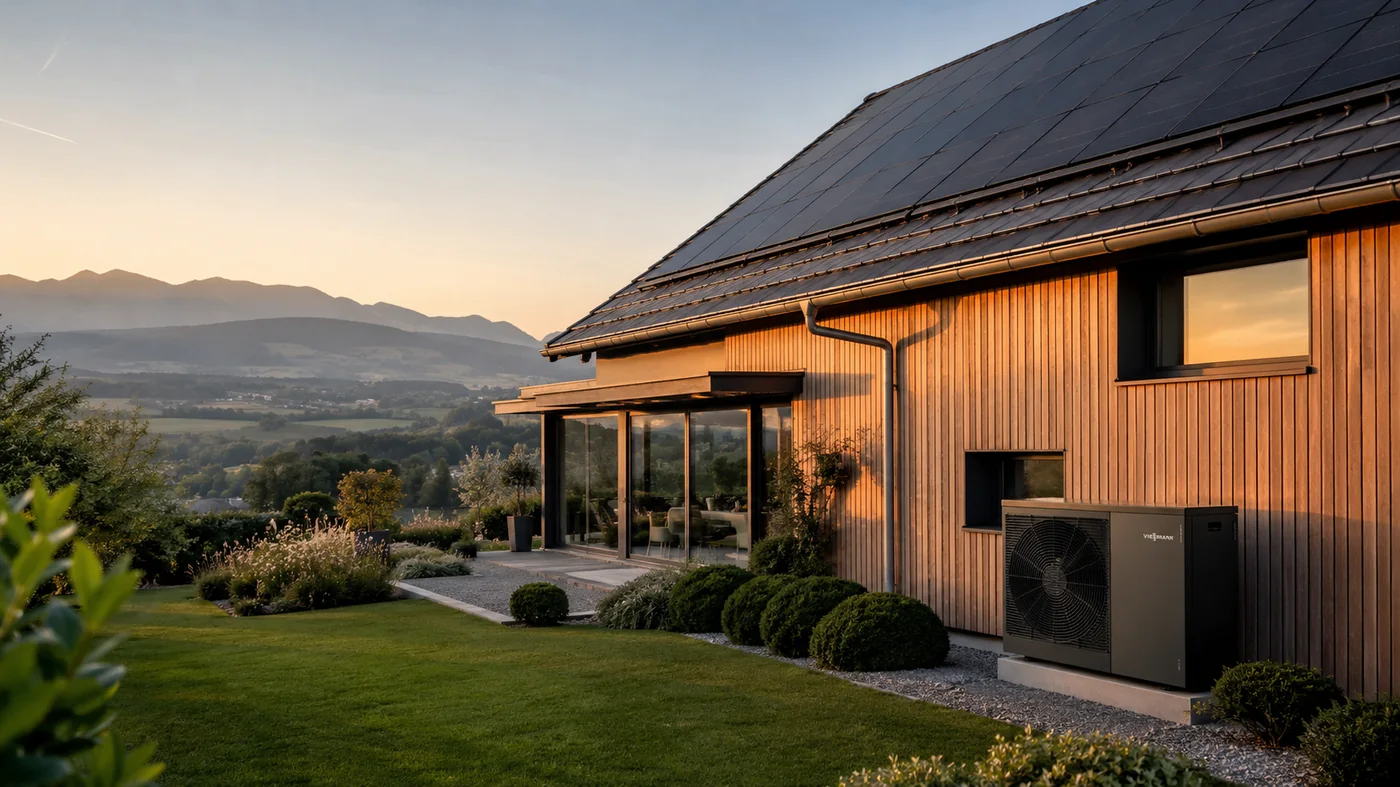
And this is where abolishing the imputed rental value collides with climate policy: by removing the deduction for energy investments at federal level, the reform strips away a major tax incentive that encouraged owners to renovate. Replacing an oil-fired boiler with a heat pump, insulating a façade, installing solar panels: these investments of CHF 30’000 to CHF 100’000 will no longer be deductible from taxable income.
The cantons as a safety net?
The law provides that cantons may retain the deductibility of energy renovations until 2050. But nothing obliges them to. And the cantons, already facing an estimated tax loss of CHF 1.2 billion per year (out of the 1.8 billion total), could be tempted not to keep these deductions. The risk: a sharp slowdown in the renovation of the building stock, in direct contradiction with climate commitments.
For owners of a property built before 1990, the message is clear: if you are considering an energy renovation, the optimal tax window closes at the end of 2028.
Impact on the property market
The reform will have structural effects on the market. By making home ownership more attractive from a tax standpoint for debt-free households, it should stimulate demand, and therefore sustain upward pressure on prices, already strong on La Côte vaudoise and around Lake Geneva.
But beyond prices, a sharper segmentation of the market is taking shape:
- Renovated, energy-efficient properties will gain in appeal. With no tax deduction to offset a future renovation, buyers will favour “ready-to-live-in” properties.
- Older, unrenovated properties will come under greater price pressure. The cost of bringing them up to standard, now non-deductible, will be factored into negotiations on the downside.
- Indebted owners will become more sensitive to the overall cost of ownership, which could speed up some decisions to sell.
The tax losses are estimated at CHF 1.8 billion per year in total (two thirds for the cantons, one third for the Confederation). How the cantons, notably Vaud and Genève, will make up these losses remains an open question that could influence local taxation.

What I recommend to my clients
This reform reshuffles the cards. Rather than following a blanket rule, here is the approach I take with the owners I work with.
1. Analyse your current situation
What is your level of debt? What condition is your property in? Is your holding horizon 5, 10 or 20 years? These parameters fundamentally change the answer. A retiree with no mortgage and a young couple with an 80% loan are not living through the same reform.
2. Weigh up three options
- Renovate now: if the work is necessary and the tax deduction makes the project clearly more worthwhile before 2029.
- Wait: if your property is in good condition and you have no urgent work. Don’t renovate out of tax-driven panic.
- Sell with strategic timing: if your property needs a major renovation and you were already considering a sale in the medium term, it may be wise to act before the market penalises unrenovated properties further.
3. Anticipate the future value of your property
The question is no longer simply “what is my property worth today”, but “what will it be worth in a market where buyers factor in the cost of renovation with no tax deduction?” The energy positioning of your property, local competition and the evolution of cantonal rules are factors that will carry ever more weight.
Need concrete advice on your situation?
Every situation is different. If you own a property on La Côte vaudoise, I can help you decide whether it makes sense to renovate before the reform, assess the impact on your property’s value, or define a strategy for holding or selling.

Partager cet article
What my clients say
Rated 5 out of 5“I was looking to improve the comfort and energy efficiency of my house, in particular to benefit from the tax deductions before they were withdrawn. Rémi immediately put me in touch with a specialist he trusts, who carried out a full audit, and I was able to move forward calmly and on time. A generous professional, who goes well beyond a simple transaction and advises in people's real interest. Thank you Rémi.”